Plate Heat Exchanger – An Efficient Heat Transfer Solution for Industrial Systems
02/02/2026What is a Plate Heat Exchanger and Why Is It Widely Used?
In modern industrial systems such as HVAC, water treatment, food & beverage, chemical processing, energy, and pharmaceuticals, fast, efficient, and energy-saving heat transfer is a critical requirement. The Plate Heat Exchanger has emerged as an optimal solution, enabling maximum heat transfer efficiency within a compact installation footprint, while significantly reducing operating and maintenance costs.
With its flexible design, high thermal efficiency, and adaptability to various operating conditions, the plate heat exchanger is increasingly replacing traditional heat exchange equipment in many industrial applications.
1. Overview of Plate Heat Exchangers
A plate heat exchanger is a device that transfers heat indirectly between two or more fluids through a series of thin metal plates arranged in parallel. Hot and cold fluids flow alternately through separate channels formed between the plates, without direct contact, while achieving highly efficient heat transfer through the plate surfaces.
Key features:
- High heat transfer efficiency
- Compact structure
- Easy disassembly and maintenance
- Flexible capacity expansion
2. Construction of a Plate Heat Exchanger
A standard plate heat exchanger consists of the following main components:
2.1. Heat Transfer Plates
- Made from stainless steel 304, 316, or titanium
- Corrugated (chevron pattern) to increase surface area and induce turbulent flow
- Directly determine the thermal performance of the exchanger
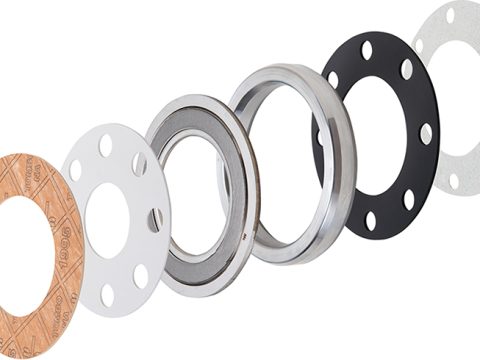
2.2. Gaskets
- Typically made from EPDM, NBR, or Viton
- Ensure tight sealing and prevent cross-contamination between fluid channels
- Easily replaceable during maintenance
2.3. Frame
- Includes a fixed frame plate and a movable pressure plate
- Holds and aligns the heat transfer plates
- Allows easy disassembly and plate number adjustment
2.4. Connection
- Inlet and outlet connections to the piping system
- Designed according to DIN, ANSI, or JIS standards
3. Operating Principle of a Plate Heat Exchanger
Plate heat exchangers operate based on the principle of indirect heat transfer. Hot and cold fluids flow through separate channels, either in counter-current or parallel flow arrangements. Heat is transferred efficiently through the thin metal plates due to:
- Large effective heat transfer surface area
- Turbulent flow reducing the thermal boundary layer
- Thin plate thickness enabling rapid heat conduction
4. Key Advantages of Plate Heat Exchangers
4.1. Superior Heat Transfer Efficiency
Heat transfer efficiency is typically 3–5 times higher than that of shell-and-tube heat exchangers under similar operating conditions.
4.2. Compact Design and Space Saving
Ideal for systems with limited installation space.
4.3. Easy Maintenance and Capacity Expansion
Individual plates can be removed for cleaning, inspection, or additional plates can be added to increase capacity.
4.4. Energy Saving and Lower Operating Costs
Reduced heat losses lead to lower energy consumption and reduced load on chillers, boilers, or heating systems.
5. Common Types of Plate Heat Exchangers
5.1. Gasketed Plate Heat Exchanger
- Flexible configuration and easy maintenance
- The most widely used type
5.2. Brazed Plate Heat Exchanger
- Compact construction
- Capable of withstanding higher pressures and temperatures
- Non-dismantlable design
5.3. Semi-Welded Plate Heat Exchanger
- Suitable for chemical applications
- Combines advantages of gasketed and welded designs
6. Industrial Applications of Plate Heat Exchangers
- HVAC systems: Chillers, heat pumps, heating systems
- Water treatment: Clean water, wastewater, RO systems
- Food & beverage: Pasteurization, heating, cooling processes
- Chemical & petrochemical industries: Heat exchange for corrosive media
- Pharmaceutical & biotechnology industries: High hygiene and precise temperature control
7. Selection Criteria for Plate Heat Exchangers
When selecting a suitable unit, the following factors should be considered:
- Flow rate and operating temperature
- System operating pressure
- Fluid characteristics (corrosiveness, viscosity)
- Plate and gasket materials
- Applicable standards (ISO, ASME)
8. Installation and Operation Considerations
- Ensure correct flow direction
- Do not operate beyond design pressure limits
- Perform periodic cleaning to prevent fouling
- Regularly inspect gaskets to avoid leakage
Conclusion: Plate Heat Exchangers – An Optimal Heat Transfer Solution for Modern Systems
The Plate Heat Exchanger is an ideal solution for industrial systems requiring high efficiency, energy savings, and long-term reliability. Selecting the correct type, materials, and configuration not only ensures stable system operation but also optimizes investment and maintenance costs throughout the equipment’s lifecycle.