Basket Strainer for Water, Steam, and Chemical Applications
12/05/2026Basket strainers are widely used industrial filtration devices designed to remove debris, rust, and solid contaminants from liquid, steam, and chemical piping systems before the process fluid reaches critical equipment. Featuring a large filtration area, low pressure drop, and high dirt holding capacity, basket strainers effectively protect pumps, valves, flow meters, and other system components while ensuring stable and reliable industrial operation.
1. What is a Basket Strainer?
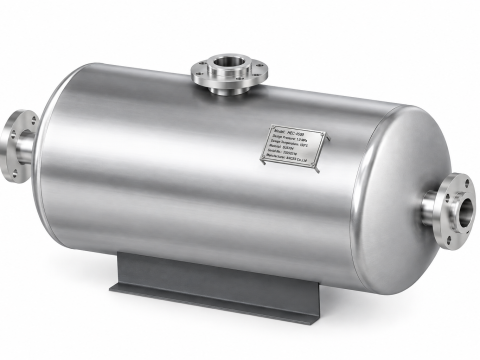
A basket strainer, also known as a pot strainer, is a filtration device designed to remove solid particles and impurities from industrial piping systems. The unit features a vertically oriented chamber with an internal basket-shaped screen, providing a larger filtration area and lower pressure drop during operation.
Compared with traditional Y-type strainers, basket strainers offer higher dirt holding capacity, larger flow handling capability, and are more suitable for continuous liquid processing systems.
2. Basket Strainer Construction
A basket strainer consists of several major components that ensure efficient filtration performance and long service life in industrial environments.
Main Components
• Strainer Body
Manufactured from:
- Carbon steel
- Stainless steel
- Alloy steel
- Duplex stainless steel
The body is designed to withstand high pressure and temperature conditions.
• Cover / Bonnet
Bolted cover design allows easy opening for cleaning and maintenance.
• Basket Screen
Made of stainless steel with perforated or mesh construction to retain debris and contaminants from the process fluid.
• Drain Connection
Allows quick draining and cleaning without removing the entire unit from the pipeline.
• Gasket
Provides tight sealing performance and prevents leakage during operation.
3. Working Principle of Basket Strainer
When the process fluid enters the strainer, the flow passes through the internal basket screen. Solid particles such as:
- Rust
- Sand
- Metal debris
- Foreign particles
are trapped inside the basket element.
After filtration, the clean fluid continues downstream to protect important equipment such as:
- Pumps
- Control valves
- Flow meters
- Heat exchangers
The straight-through flow design minimizes pressure loss and maintains stable system performance.
4. Standard Technical Specifications
Size Range
- 2 inch to 24 inch
- Equivalent to DN50 to DN600
Pressure Rating
- Class 150 to Class 900
- PN10 to PN150
End Connections
- Flanged
- Butt weld
- Socket weld
- Threaded
Design Standards
- American standards
- European standards
Body Materials
- Carbon steel
- Stainless steel
- Alloy steel
- Duplex stainless steel
Screen Materials
- Stainless steel 304
- Stainless steel 316
- Stainless steel 316L
5. Advantages of Basket Strainers
• Large Filtration Area
The large basket design increases dirt holding capacity and reduces maintenance frequency.
• Low Pressure Drop
Straight-through flow construction allows smoother fluid passage compared with Y-type strainers.
• Easy Maintenance
Bolted cover enables fast basket removal and cleaning.
• High Dirt Holding Capacity
Suitable for systems with high contamination levels or large flow rates.
• Durable Construction
Manufactured from pressure-resistant and corrosion-resistant materials.
• Flexible Configuration
Available in various materials and connection types to meet different system requirements.
6. Industrial Applications
Basket strainers are widely used in various industrial sectors.
• Water Treatment Systems
Used to remove debris before pumps and control valves.
• Steam Systems
Protects equipment from rust and pipeline contaminants.
• Oil and Gas Industry
Filters impurities in oil and chemical pipelines.
• Chemical Processing Plants
Protects instrumentation and control equipment.
• Cooling and HVAC Systems
Applied in chilled water and cooling water circulation systems.
• Food and Beverage Industry
Removes particles from production process lines.
7. Basket Strainer vs Y-Type Strainer
| Criteria | Basket Strainer | Y-Type Strainer |
|---|---|---|
| Filtration Area | Large | Smaller |
| Pressure Drop | Lower | Higher |
| Dirt Holding Capacity | High | Medium |
| Maintenance | Easier | More difficult |
| Application | Large flow systems | Small systems |
| Installation | Horizontal piping only | Horizontal or vertical |
8. Installation and Maintenance Guidelines
Installation
- Install according to the flow direction indicated on the body.
- Recommended for horizontal pipeline installation only.
- Large-size units should be properly supported.
- Ensure sufficient clearance for basket removal during maintenance.
Maintenance
- Monitor differential pressure regularly.
- Clean the basket screen periodically.
- Inspect sealing gaskets and replace when necessary.
- Drain accumulated debris routinely to maintain filtration efficiency.
9. Why Choose Basket Strainers for Industrial Piping Systems?
Basket strainers are ideal for applications requiring:
- High flow capacity
- Stable operating pressure
- Large dirt holding capability
- Easy maintenance
- Long service life
With optimized design and excellent filtration efficiency, basket strainers help protect the entire piping system while reducing plant operating costs.
10. Conclusion
Basket strainers are highly effective industrial filtration solutions for liquid, steam, and chemical applications. With advantages such as large filtration area, low pressure loss, and convenient maintenance, these strainers are widely used across modern industrial facilities.
Selecting the correct basket strainer not only protects critical equipment but also improves operational efficiency and extends the service life of the entire piping system.