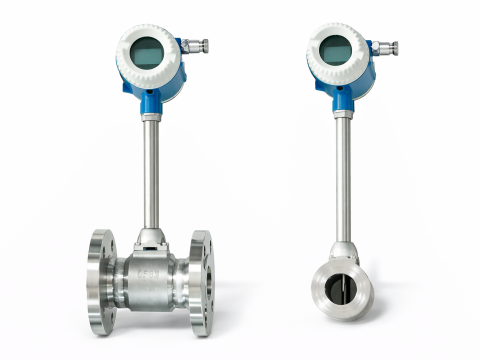
TLV COS-16 Steam Pressure Reducing Valve – An integrated pressure reducing valve with water separator and steam trap for precise steam pressure control and energy saving.
25/07/2026Are you looking for a steam pressure reducing valve capable of maintaining highly accurate secondary pressure, ensuring stable operation under varying load conditions, and delivering long-term reliability in industrial steam systems?
The TLV COS-16 Pressure Reducing Valve is a solution trusted by manufacturers worldwide, featuring TLV’s proprietary Shock-Absorbing Spherical (SAS) technology and an integrated separator and steam trap design. The valve provides precise pressure control while simultaneously removing condensate and air from the steam line, significantly improving steam quality, heat transfer efficiency, and overall system performance.
Manufactured in Japan with premium materials and advanced engineering, the TLV COS-16 is widely applied in boilers, steam distribution lines, heat exchangers, food processing plants, pharmaceutical facilities, chemical plants, HVAC systems, and numerous other industrial steam applications.
1. What is the TLV COS-16 Pressure Reducing Valve?
The TLV COS-16 is a pilot-operated steam pressure reducing valve specifically designed for saturated steam systems.
Unlike conventional pressure reducing valves, the COS-16 integrates three essential functions into a single compact unit:
- Precise steam pressure reduction.
- High-efficiency steam separation.
- Automatic condensate discharge.
This integrated design allows the COS-16 to supply dry, clean, and stable steam to downstream equipment, thereby improving process performance and reducing overall energy consumption.
The TLV COS-16 utilizes the exclusive Shock-Absorbing Spherical (SAS) pilot control system, enabling exceptionally stable pressure regulation even under rapidly changing steam demand conditions.
With decades of expertise in steam engineering, TLV Japan has established itself as one of the world’s leading manufacturers of steam equipment, renowned for outstanding reliability, energy efficiency, and superior product quality.
2. Why Do Steam Systems Require a Pressure Reducing Valve?
Steam generated by boilers is often produced at pressures significantly higher than those required by downstream process equipment.
Typical applications such as:
- Heat exchangers
- Sterilizers
- Heating coils
- Steam tracing systems
- Food processing equipment
generally require lower and more stable steam pressure.
Without an effective pressure reducing valve, the system may experience numerous operational issues.
Reduced Heat Transfer Efficiency
Excessively high steam pressure may result in:
- Steam flashing.
- Uneven temperature distribution.
- Lower heat transfer efficiency.
Damage to Downstream Equipment
High-pressure steam can shorten the service life of:
- Control valves.
- Heat exchangers.
- Steam coils.
- Steam hoses.
- Process equipment.
Increased Energy Consumption
Unstable pressure causes excessive steam usage, forcing the boiler to consume more fuel.
Poor Process Stability
Fluctuating steam pressure leads to:
- Inconsistent product quality.
- Unstable process temperatures.
- Reduced production efficiency.
The TLV COS-16 is specifically designed to eliminate these problems by providing highly accurate pressure control while supplying dry steam to downstream equipment.
3. Operating Principle of the TLV COS-16
The TLV COS-16 operates based on a pilot-operated pressure reducing mechanism combined with a built-in steam separator and free float steam trap.
During Start-Up
When the steam system starts:
- High-pressure steam enters the valve body.
- The built-in separator removes condensate and entrained moisture.
- Dry steam flows into the pilot control chamber.
- The pilot valve regulates the opening position of the main valve.
- Secondary pressure gradually reaches the preset value.
During Normal Operation
As steam demand changes:
- The pilot valve continuously senses downstream pressure.
- The SAS pilot system automatically adjusts the main valve position.
- Secondary pressure remains stable despite varying steam flow rates.
This allows the COS-16 to maintain highly accurate pressure regulation across a wide operating range.
Condensate Removal
As steam flows through the separator:
- Water droplets are separated from the steam.
- Condensate accumulates inside the separator chamber.
- The built-in Free Float Steam Trap automatically discharges condensate.
- Only dry saturated steam is delivered downstream.
This process occurs continuously and automatically without requiring any external control or power supply.
4. Construction of the TLV COS-16 Pressure Reducing Valve
4.1. Valve Body
The valve body is manufactured from high-strength ductile cast iron or cast steel (depending on the model), providing excellent resistance to pressure, temperature, and thermal stress in industrial steam applications.
Its robust construction offers:
- Excellent pressure resistance.
- Outstanding durability.
- Long service life.
- Stable operation under severe operating conditions.
4.2. Pilot Valve
The pilot valve is the core pressure-sensing component of the COS-16.
Its functions include:
- Detecting downstream pressure.
- Continuously regulating the main valve.
- Maintaining constant outlet pressure.
The pilot-operated design enables the valve to achieve significantly higher pressure control accuracy than direct-acting pressure reducing valves.
4.3. Shock-Absorbing Spherical (SAS) Technology
One of the most distinctive features of the TLV COS-16 is its proprietary Shock-Absorbing Spherical (SAS) technology.
Key advantages include:
- Rapid response to load fluctuations.
- Stable pressure regulation.
- Minimized pressure hunting.
- Reduced vibration.
- Lower operating noise.
- Improved long-term durability.
This patented TLV technology ensures exceptionally stable pressure control even under rapidly changing steam demand.
4.4. Built-in Cyclone Separator
The COS-16 incorporates a high-efficiency cyclone separator.
Its functions include:
- Separating condensate.
- Removing entrained moisture.
- Improving steam dryness.
- Enhancing heat transfer efficiency.
The separator significantly improves steam quality before it reaches downstream equipment.
4.5. Built-in Free Float Steam Trap
A built-in Free Float Steam Trap continuously discharges condensate separated from the steam.
Advantages include:
- Continuous condensate removal.
- No steam leakage.
- Improved steam quality.
- Elimination of the need for an external steam trap.
4.6. Internal Strainer
A stainless steel strainer is integrated inside the valve body to:
- Prevent debris from entering the valve.
- Protect internal components.
- Extend service life.
- Reduce maintenance frequency.
5. Key Features of the TLV COS-16
The TLV COS-16 has been specifically designed to meet the stringent requirements of modern industrial steam systems. Thanks to its integrated pressure reducing, steam separating, and condensate removal functions, the valve provides numerous outstanding advantages:
- Highly accurate pressure regulation.
- Stable secondary pressure under varying load conditions.
- Integrated cyclone separator.
- Built-in Free Float Steam Trap.
- Delivers dry saturated steam.
- No external steam trap required.
- No external separator required.
- Proprietary SAS pressure control technology.
- Quick response to load changes.
- Reduced pressure hunting.
- Low operating noise.
- High steam quality.
- Improved heat transfer efficiency.
- Reduced steam consumption.
- Lower boiler fuel consumption.
- Compact design.
- Easy installation.
- Minimal maintenance.
- Long service life.
- Reliable operation in demanding industrial environments.
These features make the TLV COS-16 one of the world’s most efficient all-in-one steam pressure reducing valves.
6. Technical Specifications of the TLV COS-16
According to the manufacturer’s technical documentation, the TLV COS-16 features the following typical specifications:
| Specification | Value |
|---|---|
| Model | COS-16 |
| Type | Pilot-Operated Steam Pressure Reducing Valve |
| Brand | TLV – Japan |
| Applicable Fluid | Saturated Steam |
| Connection Type | Flanged / Threaded (depending on model) |
| Pressure Reducing System | Pilot Operated |
| Steam Separator | Built-in Cyclone Separator |
| Steam Trap | Built-in Free Float Steam Trap |
| Body Material | Ductile Cast Iron / Cast Steel |
| Maximum Operating Temperature | According to model specification |
| Manufacturing Standard | Japan |
Note: Maximum inlet pressure, adjustable outlet pressure range, temperature rating, and available connection sizes vary depending on the specific COS-16 model. Please refer to the official TLV catalog for detailed technical specifications.
7. Advantages of the TLV COS-16 Integrated Design
The greatest advantage of the TLV COS-16 lies in its three-in-one integrated design.
Unlike conventional installations that require:
- Pressure Reducing Valve
- Steam Separator
- Steam Trap
the COS-16 combines all three functions into a single unit.
Superior Steam Quality
The built-in separator continuously removes moisture before steam reaches downstream equipment.
Benefits include:
- Increased steam dryness.
- Improved heat transfer.
- Reduced condensate carryover.
Lower Installation Cost
Since no external separator or steam trap is required, the COS-16 helps reduce:
- Installation space.
- Piping work.
- Installation time.
- Overall project cost.
Reduced Maintenance
The integrated design minimizes:
- Number of components.
- Potential leakage points.
- Maintenance requirements.
- Downtime.
Higher Energy Efficiency
By supplying dry steam at a stable pressure, the COS-16 helps:
- Improve heat transfer efficiency.
- Reduce steam consumption.
- Lower boiler fuel costs.
- Increase overall plant efficiency.
8. Typical Applications of the TLV COS-16
The TLV COS-16 is widely used in industrial steam systems across numerous industries.
8.1. Boiler Systems
Installed on:
- Main steam lines.
- Steam headers.
- Steam distribution networks.
Benefits include:
- Stable pressure reduction.
- Improved steam quality.
- Reduced energy consumption.
8.2. Heat Exchangers
Suitable for:
- Plate Heat Exchangers.
- Shell & Tube Heat Exchangers.
- Air Heaters.
Helps:
- Improve heat transfer.
- Reduce condensate accumulation.
- Increase production efficiency.
8.3. HVAC Heating Coils
Widely applied in:
- AHU.
- FCU.
- Heating Coils.
- Drying Coils.
Providing:
- Stable heating temperature.
- Lower steam consumption.
- Improved temperature control.
8.4. Food & Beverage Industry
Used in:
- Sterilizers.
- Cooking kettles.
- Pasteurization systems.
- Food processing lines.
- CIP/SIP systems.
8.5. Pharmaceutical Industry
Ideal for:
- Clean steam systems.
- Sterilizers.
- Autoclaves.
- Pharmaceutical production equipment.
8.6. Chemical Industry
Applied in:
- Steam-heated reactors.
- Evaporators.
- Steam tracing systems.
- Process steam pipelines.
8.7. Textile & Paper Industry
Suitable for:
- Paper dryers.
- Textile drying machines.
- Steam-heated rollers.
- Calender machines.
9. Selection and Installation Guide
Selection Criteria
To select the appropriate TLV COS-16 Pressure Reducing Valve, the following factors should be carefully evaluated:
- Boiler steam pressure.
- Required secondary (outlet) pressure.
- Steam flow rate.
- Pipe size.
- Connection type.
- Operating temperature.
- Process equipment requirements.
Selecting the correct pressure reducing valve not only ensures stable system operation but also maximizes heat transfer efficiency and extends equipment service life.
Installation Guidelines
For optimum performance, the following installation practices are recommended:
- Install according to the flow direction indicated by the arrow on the valve body.
- Install the valve horizontally unless otherwise specified by the manufacturer.
- Provide sufficient straight pipe length upstream and downstream of the valve.
- Install isolation valves before and after the pressure reducing valve.
- Install pressure gauges on both the inlet and outlet sides.
- Ensure adequate space for future maintenance and inspection.
Because the COS-16 incorporates a built-in separator and steam trap, additional external condensate drainage equipment is generally unnecessary, simplifying the piping layout.
Operating Precautions
To maintain long-term performance:
- Verify that inlet pressure is within the allowable operating range.
- Adjust the secondary pressure according to system requirements.
- Periodically inspect the built-in strainer and clean it when necessary.
- Check pressure stability during operation.
- Perform routine maintenance in accordance with the TLV maintenance manual.
Proper installation and maintenance help maximize energy savings and ensure reliable long-term operation.
10. Why Choose TLV Japan?
TLV Co., Ltd. is recognized worldwide as one of the leading manufacturers specializing exclusively in steam engineering and condensate recovery solutions.
With decades of continuous innovation, TLV has become synonymous with high-quality steam equipment trusted by thousands of industrial facilities across the globe.
Advantages of the TLV Brand
- Advanced Japanese engineering technology.
- Extensive expertise in industrial steam systems.
- Innovative patented technologies.
- High-precision manufacturing.
- Strict quality control standards.
- Excellent product reliability.
- Long service life.
- Comprehensive technical support.
- Wide range of steam equipment solutions.
TLV products are extensively used in:
- Food & Beverage Industry.
- Pharmaceutical Industry.
- Chemical Industry.
- Petrochemical Industry.
- Power Plants.
- Textile Industry.
- Paper Mills.
- HVAC Systems.
- Semiconductor Manufacturing.
- Electronics Industry.
- General Industrial Steam Applications.
Choosing the TLV COS-16 Pressure Reducing Valve enables industrial facilities to:
- Improve steam quality.
- Increase heat transfer efficiency.
- Reduce steam consumption.
- Lower boiler fuel costs.
- Improve production stability.
- Reduce maintenance costs.
- Enhance the overall reliability of the steam system.
11. Quotation and Technical Consultation
The price of the TLV COS-16 Pressure Reducing Valve depends on several factors, including:
- Nominal pipe size.
- Inlet pressure.
- Required outlet pressure setting.
- Connection type.
- Body material.
- Order quantity.
- Project technical specifications.
- Delivery schedule.
To receive an accurate quotation and professional assistance in selecting the most suitable TLV COS-16 Pressure Reducing Valve for your steam system, please contact our engineering team.
We supply genuine TLV COS-16 Pressure Reducing Valves imported from Japan, complete with CO/CQ documentation, and provide comprehensive technical support, model selection, and steam system optimization solutions for boilers, steam distribution lines, heat exchangers, HVAC systems, food processing plants, pharmaceutical manufacturing, chemical processing facilities, paper mills, textile plants, and numerous other industrial steam applications—helping your steam system operate safely, efficiently, energy-efficiently, and reliably throughout its entire service life.