Zenshin ZTF-2000 Stainless Steel PTFE-Lined Flexible Joint – The Ideal Solution for Vibration Isolation, Thermal Expansion Compensation, and Chemical Corrosion Resistance in Industrial Piping Systems
16/07/2026In industrial piping systems, vibration generated by pumps, thermal expansion, installation misalignment, and corrosive chemical environments are among the primary causes of reduced service life for pipelines, flanges, valves, and process equipment. If not properly addressed, these issues can lead to leakage, pipe cracking, equipment damage, and costly production downtime.
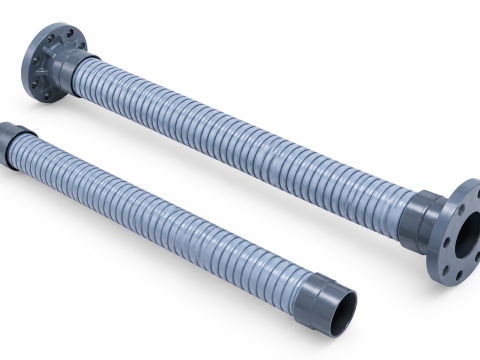
The ZTF-2000 Stainless Steel PTFE-Lined Flexible Joint by Zenshin is specifically engineered to effectively solve these challenges. The product features a PTFE (Polytetrafluoroethylene) flexible tube, reinforced with a Polypropylene (PP) braided protective layer, and stainless steel flanged connections manufactured in accordance with the JIS 10K standard. This design enables the joint to absorb movement, isolate vibration, resist aggressive chemicals, and maintain reliable leak-tight performance throughout the piping system.
Manufactured by Zenshin Co., Ltd., Japan, the ZTF-2000 Series is an ideal solution for chemical processing systems, ultrapure water systems, semiconductor manufacturing, food and beverage production, pharmaceutical processing, water treatment facilities, and other industrial applications requiring exceptional corrosion resistance.
1. What is the Zenshin ZTF-2000 Stainless Steel PTFE-Lined Flexible Joint?
The ZTF-2000 is a specialized PTFE Flexible Joint designed to:
- Compensate for thermal expansion of piping systems
- Absorb vibration generated by pumps and rotating machinery
- Accommodate installation misalignment
- Reduce mechanical stress transmitted to equipment
- Provide outstanding chemical corrosion resistance
Unlike conventional stainless steel flexible joints, the process fluid inside the ZTF-2000 comes into contact only with the PTFE tube, effectively eliminating the risk of metal corrosion even when handling highly corrosive chemicals.
Designed in accordance with Japanese industrial engineering standards, the ZTF-2000 offers a robust structure, excellent sealing performance, and long service life, making it suitable for both new installations and retrofit projects.
2. Operating Principle
The ZTF-2000 Flexible Joint operates based on the elastic deformation capability of the PTFE tube combined with its reinforced outer protective braid.
Whenever the piping system experiences:
- Thermal expansion
- Pipe contraction
- Lateral displacement
- Pump-induced vibration
- Minor installation misalignment
the PTFE tube absorbs these movements before the forces are transmitted to the piping system and connected equipment.
As a result, the joint provides the following benefits:
- Reduces mechanical stress
- Minimizes flange loading
- Prevents pipe cracking and structural damage
- Reduces operating noise
- Extends the service life of the entire piping system
This operating principle has been widely adopted in modern chemical processing plants and industrial piping systems where vibration isolation and expansion compensation are essential.
3. Construction of the ZTF-2000 Flexible Joint
3.1 PTFE Tube
The PTFE tube is the most critical component of the flexible joint.
Manufactured entirely from virgin PTFE (Polytetrafluoroethylene), it provides numerous outstanding advantages, including:
- Excellent resistance to virtually all chemicals
- Non-stick surface
- No contamination of process media
- High temperature resistance
- Extremely low coefficient of friction
- Long service life
Zenshin offers two PTFE tube configurations.
PTFE Straight Tube (SH)
Features
- Straight-wall construction
- Smooth internal bore
- Minimizes fluid retention
- Reduces scale and deposit formation
- Suitable for high-purity process media
Typical Applications
- RO Water Systems
- DI Water Systems
- Ultrapure Water (UPW)
- Pharmaceutical Industry
- Food & Beverage Industry
PTFE Corrugated Tube (PH)
This configuration is used in the ZTF-2000PH model.
Features
- Corrugated tube construction
- High flexibility
- Excellent displacement absorption capability
- Superior vibration isolation
- Easier installation
This version is particularly suitable for pump piping systems and chemical processing pipelines.
3.2 Protective Braid
The PTFE tube is externally reinforced with a braided protective layer.
According to the technical drawing, this model utilizes:
Polypropylene (PP)
Functions
- Protects the PTFE tube
- Restrains excessive deformation
- Improves structural strength
- Provides resistance against mechanical impact
- Extends product service life
3.3 Flange
The joint is equipped with:
SUS316 Stainless Steel Flanges
Flange Standard
- JIS 10K
Advantages
- High mechanical strength
- Excellent corrosion resistance
- Precision machining
- Easy installation
- Compatible with Japanese standard piping systems
3.4 Sleeve
The sleeve is manufactured from:
SUS304 Stainless Steel
Functions
- Reinforces the connection ends
- Improves mechanical strength
- Maintains structural stability
3.5 Cover
The protective cover is manufactured from:
SUS304 Stainless Steel
Its functions include:
- Protecting the joint ends
- Preventing external mechanical damage
- Enhancing overall mechanical durability
3.6 Backup Gasket
The gasket material is:
Non-Asbestos
Functions
- Improves sealing performance
- Prevents leakage
- Maintains reliable sealing under operating pressure
4. Key Features of the ZTF-2000 PTFE Flexible Joint
4.1 Outstanding Chemical Corrosion Resistance
PTFE is recognized as one of the most chemically resistant engineering materials available today.
The ZTF-2000 is suitable for handling a wide range of process media, including:
- Strong acids
- Alkalis
- Salts
- Organic solvents
- Oxidizing chemicals (within the chemical compatibility limits of PTFE)
- Water treatment chemicals
This provides a significant advantage over conventional rubber expansion joints and standard stainless steel flexible joints.
4.2 Excellent Vibration Isolation Performance
The flexible joint effectively absorbs vibration generated by:
- Centrifugal pumps
- Compressors
- Rotating machinery
- Process piping systems
As a result, it offers the following benefits:
- Reduces operating noise
- Protects connected equipment
- Extends bearing service life
- Lowers maintenance costs
4.3 Thermal Expansion Compensation
When operating temperatures fluctuate, pipelines naturally expand and contract.
The ZTF-2000 is capable of accommodating:
- Axial Movement
- Lateral Movement
- Angular Movement
This significantly reduces the mechanical load transmitted to:
- Valves
- Pumps
- Heat exchangers
- Storage tanks
- Measuring instruments
4.4 Anti-Fouling Performance
The PTFE tube features an extremely smooth internal surface.
Its advantages include:
- Minimizes scale and deposit formation
- Easy to clean
- Reduces pressure loss
- Maintains stable flow performance
This makes it particularly suitable for:
- Food processing
- Pharmaceutical manufacturing
- Ultrapure water systems
4.5 High Temperature Resistance
According to the manufacturer’s specifications, the ZTF-2000 is designed to operate within a temperature range of:
−20°C to +150°C
This operating range satisfies the requirements of most chemical processing and industrial liquid handling applications.
4.6 Compact Design and Easy Installation
The product is equipped with standard JIS 10K flanged connections.
This allows for:
- Quick replacement
- Convenient maintenance
- Easy integration into existing piping systems
5. Technical Specifications of the ZTF-2000 Flexible Joint
Depending on the model and nominal size, the Zenshin ZTF-2000 PTFE-Lined Flexible Joint is available with the following specifications:
| Specification | Description |
|---|---|
| Brand | Zenshin |
| Country of Origin | Japan |
| Model | ZTF-2000 |
| Product Type | PTFE Flexible Joint |
| Tube Type | Corrugated PTFE (PH) / Straight PTFE (SH) |
| Tube Material | PTFE (Polytetrafluoroethylene) |
| Protective Braid | Polypropylene (PP) |
| Flange Material | SUS316 Stainless Steel |
| Sleeve Material | SUS304 Stainless Steel |
| Cover Material | SUS304 Stainless Steel |
| Gasket Material | Non-Asbestos |
| Flange Standard | JIS 10K |
| Operating Temperature | −20°C to +150°C |
| Maximum Design Pressure | 0.98 MPa (depending on nominal size) |
| Available Sizes | 15A–200A |
| Applicable Media | Chemicals, Water, RO Water, DI Water, and solvents compatible with PTFE |
Maximum Allowable Working Pressure by Nominal Size
According to Zenshin’s technical documentation, the maximum allowable working pressure varies depending on the nominal pipe size.
| Nominal Size | Maximum Working Pressure |
|---|---|
| 15A–100A | 0.98 MPa |
| 125A | 0.78 MPa |
| 150A | 0.58 MPa |
| 200A | 0.48 MPa |
These pressure ratings ensure safe operation under different pressure and temperature conditions.
6. Available Models of the ZTF-2000 PTFE Flexible Joint
The ZTF-2000 Series is available with two PTFE tube constructions to satisfy different application requirements.
6.1 ZTF-2000SH (Straight PTFE Tube)
Features
- Straight PTFE tube construction
- Completely smooth internal bore
- Eliminates dead space
- Minimizes chemical residue accumulation
- Suitable for Clean-in-Place (CIP) applications
This model is an ideal solution for systems requiring a high level of cleanliness, including:
- Pharmaceutical manufacturing
- Food & Beverage processing
- Ultrapure Water (UPW) systems
- DI Water systems
- Semiconductor manufacturing
6.2 ZTF-2000PH (Corrugated PTFE Tube)
The ZTF-2000PH model features a corrugated PTFE tube.
This is also the configuration illustrated in the ZTF-2000PH-PPB technical drawing.
Advantages
- High flexibility
- Easy installation
- Excellent movement absorption capability
- Superior vibration isolation
- Effective thermal expansion compensation
The PH model is widely used in:
- Chemical processing systems
- Water treatment plants
- Pump piping systems
- Power plants
- Heavy industrial facilities
7. Advantages of the ZTF-2000 PTFE Flexible Joint Compared with Other Types of Flexible Joints
7.1 Compared with Rubber Expansion Joints
Rubber expansion joints provide excellent vibration isolation; however, they are susceptible to aging when exposed to aggressive chemicals or elevated temperatures.
In contrast, the ZTF-2000 utilizes a PTFE tube, offering the following advantages:
- Outstanding chemical resistance
- Superior resistance to aging
- Resistant to swelling caused by many solvents
- Longer service life
7.2 Compared with Conventional Stainless Steel Flexible Joints
Conventional stainless steel flexible joints may suffer localized corrosion when handling:
- Strong acids
- Chlorine-containing media
- Oxidizing solutions
- Certain highly aggressive chemicals
Since the process fluid in the ZTF-2000 comes into contact only with the PTFE liner, the risk of corrosion is significantly minimized, improving both system safety and service life.
7.3 Compared with Rigid Piping
Rigid piping cannot absorb:
- Vibration
- Installation misalignment
- Thermal expansion
As a result, excessive mechanical loads are transferred to:
- Valves
- Pumps
- Heat exchangers
- Pressure gauges and measuring instruments
- Storage vessels
The ZTF-2000 Flexible Joint effectively minimizes these stresses, protecting the entire piping system.
8. Applications of the ZTF-2000 Flexible Joint
Thanks to its exceptional chemical resistance and movement absorption capability, the ZTF-2000 is widely used across numerous industrial sectors.
8.1 Chemical Processing Plants
This is one of the most common applications.
Suitable for handling:
- Acids
- Alkalis
- Salts
- Organic solvents
- Industrial chemicals
The joint helps protect:
- Chemical transfer pumps
- Valves
- Reactors
- Process piping
8.2 Water Treatment Systems
Commonly installed in:
- Potable water systems
- Water supply systems
- RO water systems
- DI water systems
- Ultrapure Water (UPW) systems
The flexible joint effectively isolates pump vibration while protecting the piping system.
8.3 Semiconductor Manufacturing
The high purity of PTFE makes the ZTF-2000 particularly suitable for:
- Chemical Supply Systems
- Ultrapure Water (UPW) Systems
- Wet Bench Equipment
- Chemical Mixing Systems
8.4 Pharmaceutical Industry
Widely used in:
- CIP (Clean-in-Place) Systems
- SIP (Steam-in-Place) Systems
- Chemical transfer piping
- Pharmaceutical production lines
8.5 Food & Beverage Industry
PTFE is chemically inert toward a wide range of food products.
Typical applications include:
- Water distribution piping
- Cleaning chemical piping
- Food processing production lines
8.6 Power Plants
Common installation locations include:
- Cooling water systems
- Chemical piping systems
- Water treatment facilities
8.7 Electronics Manufacturing
Suitable for conveying:
- High-purity chemicals
- Industrial solvents
- Process water
9. Guidelines for Selecting the Appropriate PTFE Flexible Joint
To select the most suitable ZTF-2000 model, the following factors should be considered.
Process Medium
Typical media include:
- Acids
- Alkalis
- Solvents
- Water
- RO Water
- DI Water
- Ultrapure Water (UPW)
Always verify that the selected PTFE material is compatible with the intended process medium.
Operating Temperature
The ZTF-2000 is designed for an operating temperature range of:
−20°C to +150°C
The selected model should be suitable for the actual operating conditions.
Operating Pressure
The system operating pressure must not exceed the maximum allowable pressure specified for each nominal size.
Movement Requirements
Determine the expected piping movement, including:
- Axial Movement
- Lateral Movement
- Angular Movement
This information is essential for selecting the appropriate joint length and construction.
Flange Standard
The standard configuration is supplied with:
JIS 10K Flanges
Other flange standards may be available upon request, subject to the manufacturer’s production capability.
PTFE Tube Configuration
Select the appropriate tube type based on application requirements:
If high cleanliness is required:
→ ZTF-2000SH (Straight PTFE Tube)
If greater flexibility and movement absorption are required:
→ ZTF-2000PH (Corrugated PTFE Tube)
10. Why Choose Zenshin?
Zenshin Co., Ltd. is one of Japan’s leading manufacturers specializing in metallic flexible joints, PTFE flexible joints, and expansion compensation solutions for industrial piping systems.
Zenshin products are trusted by industries worldwide because of their:
- Advanced Japanese manufacturing technology
- Strict quality control system
- Premium materials with exceptional durability
- Excellent corrosion and temperature resistance
- Optimized design for vibration isolation and thermal expansion compensation
- Reliable leak-tight performance with long service life
- Comprehensive product range meeting various industrial standards
Selecting the Zenshin ZTF-2000 PTFE Flexible Joint not only improves the safety and reliability of industrial piping systems but also reduces maintenance costs, extends equipment service life, and enhances overall operational efficiency across a wide range of industrial applications.
11. Quotation and Technical Consultation
The price of the Zenshin ZTF-2000 Stainless Steel PTFE-Lined Flexible Joint depends on several factors, including:
- Nominal size (15A–200A)
- PTFE tube type (PH or SH)
- Joint length
- Working pressure
- Flange standard
- Order quantity
- Operating conditions and project-specific technical requirements
For an accurate quotation and professional technical consultation, please contact our engineering team.
We supply genuine Zenshin ZTF-2000 PTFE Flexible Joints in a complete range of sizes and configurations to meet the demanding requirements of chemical processing, water treatment, semiconductor manufacturing, pharmaceutical production, food & beverage processing, and many other industrial applications—helping your piping systems operate safely, reliably, and efficiently throughout their service life.