Technical Considerations for Operating and Maintaining ASAHIAV Plastic Valves – A Comprehensive Guide to Ensuring Safe Operation, Long Service Life, and Optimum System Performance (Part 2)
28/07/2026In Part 1, we discussed the key considerations for selecting, transporting, and installing ASAHIAV plastic valves. However, even a properly installed system can deteriorate rapidly if operation and maintenance are not carried out in accordance with the manufacturer’s recommendations.
In practice, many issues such as valve leakage, increased operating torque, actuator failure, or significantly reduced valve service life are caused by improper operation or inadequate preventive maintenance.
This article summarizes ASAHIAV’s essential technical recommendations for valve operation, inspection, and maintenance to help facilities maintain stable operating performance, extend equipment service life, and reduce maintenance and repair costs.
8. Operating Precautions for ASAHIAV Valves
After installation and system inspection have been completed, valve operation must also follow proper engineering practices to ensure correct functionality and maximize service life.
8.1 Open the Valve Gradually During System Start-up
One of the most common operating mistakes is opening the valve too quickly immediately after introducing process fluid into the system.
This may result in:
- Sudden pressure rise
- Water Hammer
- Severe impact on the valve disc or ball
- Damage to sealing components
- Deformation of internal valve parts
ASAHIAV recommends:
- Open the valve gradually.
- Increase the flow rate step by step.
- Bring the system up to its operating pressure smoothly and steadily.
A gradual start-up minimizes stress on the entire piping system and helps extend valve service life.
8.2 Do Not Operate Beyond the Design Conditions
Every ASAHIAV valve series has specified limits for:
- Operating pressure
- Operating temperature
- Process media
- Flow velocity
These limits should never be exceeded.
Operating outside the design specifications may result in:
- Valve body deformation
- Seal damage
- Plastic material degradation
- Leakage
- Reduced equipment service life
Particularly in high-temperature chemical applications, always refer to the Pressure–Temperature Rating chart provided by ASAHIAV before placing the valve into service.
8.3 Do Not Use the Valve for Flow Control Unless It Is Designed for That Purpose
Not all valve types are intended for throttling service.
For example:
Ball Valve
Suitable for:
- Fully closed service
- Fully open service
Not recommended for:
- Continuous partial opening
Using a Ball Valve for continuous flow regulation may cause:
- Ball surface erosion
- Accelerated seat wear
- Increased operating torque
- Reduced valve service life
For continuous flow control applications, ASAHIAV recommends using:
- Diaphragm Valve
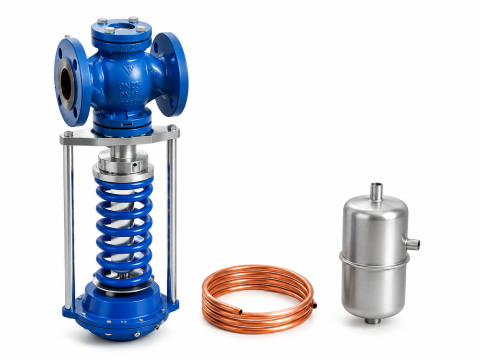
- Control Valve
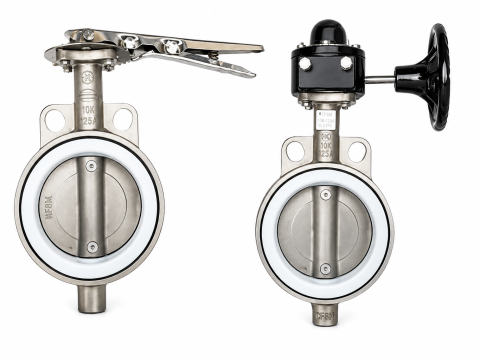
- Butterfly Valve (where suitable for the operating conditions)
8.4 Avoid Rapid Valve Opening or Closing
Opening or closing a valve too quickly may result in:
- Water Hammer
- Pressure fluctuations
- Pipe vibration
- Damage to downstream equipment
For large-size valves or valves equipped with actuators, the opening and closing speed should be adjusted in accordance with the manufacturer’s recommendations.
8.5 Do Not Apply Excessive Force to the Lever or Handwheel
If the valve becomes difficult to operate:
Do not:
- Strike it with a hammer
- Use an extension pipe
- Apply excessive force using other tools
Possible causes include:
- Dirt or debris accumulation
- Worn seals
- Lack of maintenance after long-term service
Applying excessive force may result in:
- Broken operating lever
- Valve stem deformation
- Actuator damage
9. Periodic Inspection
ASAHIAV recommends performing periodic inspections to identify abnormal conditions before they develop into system failures.
9.1 Check for Leakage
Inspect the following locations:
- Valve body
- Flange gaskets
- Threaded connections
- Valve stem
- Actuator
If any of the following is detected:
- Water leakage
- Chemical leakage
- Gas leakage
The root cause should be identified and corrected immediately to maintain safe system operation.
9.2 Check Operating Torque
If the valve begins to exhibit any of the following symptoms:
- Increased operating torque
- Stiff operating handle
- Uneven opening or closing movement
Possible causes include:
- Scale or debris buildup
- Aged sealing components
- Dry valve stem
- Worn internal components
The valve should not continue to be operated if an abnormal increase in operating force is observed.
9.3 Inspect the Actuator
For pneumatic or electric actuators, periodically inspect:
- Air supply pressure
- Electrical power supply
- Opening and closing stroke
- Operating speed
- Limit switches
Routine inspection helps detect potential problems before they result in unexpected system shutdowns.
Dưới đây là Phần cuối (Mục 10 → Mục 12), tiếp tục giữ nguyên bố cục và sử dụng thuật ngữ kỹ thuật theo phong cách tài liệu hướng dẫn của ASAHIAV.
10. Maintenance of ASAHIAV Plastic Valves
Proper maintenance is essential for ensuring long-term valve performance and reliability.
10.1 Perform Periodic Cleaning
For systems handling:
- Chemicals
- Wastewater
- Slurry
- Fluids containing suspended solids or deposits
The following components should be cleaned regularly:
- Valve cavity
- Valve seat
- Valve disc
- Valve stem
Do not use:
- Metal wire brushes
- Sharp or pointed tools
These tools may damage the valve’s sealing surfaces and adversely affect sealing performance.
10.2 Replace Seals When Necessary
After prolonged service, sealing components may become:
- Aged
- Less elastic
- Worn
- Deformed
If leakage is observed at any sealing location, replace the seals with genuine replacement parts made from the appropriate material, such as:
- EPDM
- FKM (Viton®)
- PTFE
- CSM
Do not use sealing materials that are incompatible with the process media, as this may compromise chemical resistance and significantly reduce valve service life.
10.3 Use Genuine Replacement Parts
ASAHIAV recommends using only genuine replacement components, including:
- Genuine gaskets
- Genuine valve seats
- Genuine valve stems
- Genuine actuators
Using non-genuine or non-standard components may reduce sealing performance, impair operational efficiency, and compromise the compatibility and reliability of the entire piping system.
11. Common Mistakes to Avoid
During the operation of ASAHIAV plastic valves, the following practices should be avoided:
- Opening or closing the valve too quickly
- Using a Ball Valve for continuous flow regulation
- Applying excessive operating force
- Neglecting periodic inspections
- Failing to clean valves used in systems containing heavy deposits
- Allowing chemicals to crystallize inside the valve
- Operating beyond the allowable pressure or temperature limits
- Using sealing materials that are incompatible with the process media
- Failing to replace worn or damaged components
- Using non-genuine replacement parts
These mistakes can significantly reduce valve service life while increasing maintenance costs throughout the entire piping system.
12. Conclusion
ASAHIAV plastic valves are manufactured to Japan’s high-quality engineering standards, providing outstanding durability, excellent corrosion resistance, and reliable performance across a wide range of industrial applications. However, to fully realize these advantages, proper installation (Part 1) together with correct operation and preventive maintenance (Part 2) is essential.
Following ASAHIAV’s recommendations enables users to:
- Maintain stable and reliable operating performance
- Minimize leakage and unexpected failures
- Extend the service life of valves and piping systems
- Reduce maintenance and equipment replacement costs
- Improve operational safety
- Maximize the return on investment for industrial piping systems
Establishing a periodic inspection and preventive maintenance program in accordance with the manufacturer’s recommendations not only improves overall system reliability but also helps minimize unplanned downtime, reduce operating costs, and ensure continuous, efficient production over the long term.